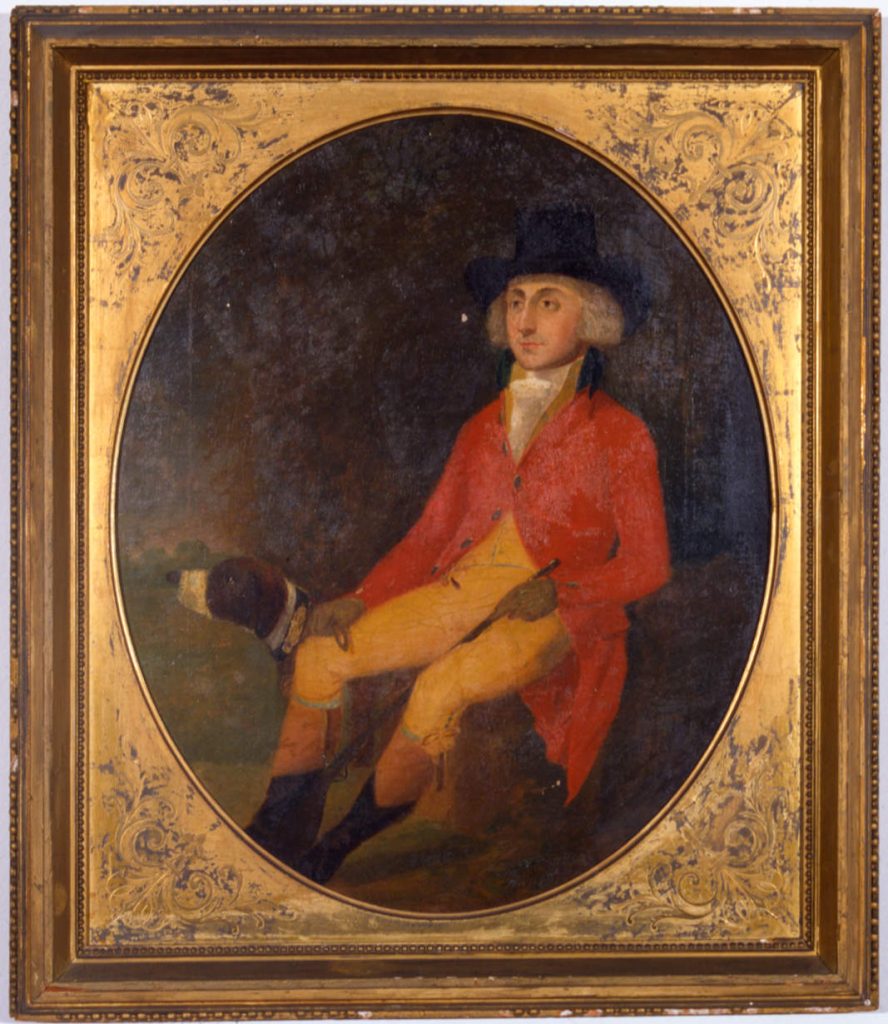
Jacob da Fonseca Brandon was not American. Indeed, it is possible he never left London. He is included here because the travels of a number of his children resulted in his having descendants in the New World—a fact that reflects broader patterns of Sephardic migration throughout the early modern Atlantic world. Brandon thus represents Sephardic merchants of the eighteenth century Atlantic, as well as the very processes of historical change and the restless and curious movements of peoples.
Born to a prominent Sephardic family, Brandon traced his lineage back to a variety of illustrious ancestors. Among these were the Fonsecas of Madrid; he may well have had in his family tree a converso archbishop who helped preside over the Inquisition, Cardinal da Fonseca. On the Brandon side, he claimed to be related to Charles Brandon, first Duke of Suffolk, whose father had been slain while defending Henry Tudor (later Henry VII) during the decisive Battle of Bosworth Field, although there is no evidence for such a claim. The established facts of his family roots were a bit more pedestrian. His father, Hezekiah Joshua Israel Brandon (called Joshua), and grandfather, David Israel Brandon, were London merchants of note with trading ties to both the West and East Indies. Joshua Brandon was, by the time of Jacob’s childhood, a well-established London tobacco factory businessman with multiple properties in the London borough of Hackney.
Jacob Brandon himself was involved in East Indian trade. A shipping magnate with several Asian fleets, Brandon displayed his wealth in what served as one of eighteenth-century London’s principal arenas for ostentation—windows. The window tax, introduced in 1696 and not repealed until 1851, was a means of levying taxes based on wealth a ta time when income tax was considered by the English an infringement on personal liberty. Thus, architectural features such as windows and fireplaces were taxed as symbols of affluence. Brandon’s house had so many windows that it came to be a minor London attraction. Brandon, like his father and grandfather before him, was also deeply engaged with London’s Jewish community. In 1824, he is on record as one of the governors of the Society Mihel Sedaca for Granting Marriage Portions to Fatherless Girls, which provided dowries for orphaned Sephardic brides.
In 1788, Jacob da Fonseca Brandon married Sarah Mendes da Costa, daughter of wealthy New World plantation owners. Though the couple remained in London, it is telling that both families had profited handsomely from opportunities afforded by New World commerce. The movements of the Brandon and Mendes da Costa families through the Atlantic suggests a network of opportunities and connections, transience, and community. Sarah’s family had members who travelled extensively to the New World and back. Of Jacob and Sarah’s eight children, half never left London and half migrated to the Western hemisphere: one to Jamaica, one to Curacao, one to Surinam, and the last to New York.